Banshee Chapter

- Fundamentals, reception.
- German/American live action feature length film, 2013, rated R, 87 minutes, horror, thriller. Spoken word is in English.
- IMDB: 5.5/10.0 from 2,643 audience ratings. Estimated budget, 950,000 USD.
- Rotten Tomatoes: 78% on the meter; 43% liked it from 1,135 audience ratings.
- Directed by: Blair Erickson.
- Starring: Katia Winter as Anne Roland, Ted Levine as Thomas Blackburn, Michael McMillian as James Hirsch, Corey Moosa as Patient 11, Monique Candelaria as Patient 14, Jenny Gabrielle as Callie, David Midthunder as Raoul, Vivian Nesbitt as Olivia Kmiec, Alex Gianopoulous as Renny.
- From IMDB: '...investigative journalist, Anna, researching a missing friend who
ingested an undocumented research chemical once tested on civilians by
CIA MK-Ultra experiments.'
- There are references to numbers stations, hushed up kidnappings, and secret societies in the style of Lovecraft. That will attract some of the conspiracy theorists. On the other hand, this also pushes away many other potential viewers. Coupled with the shaky cam, this is a polarizing film, and its likely audience is small.
- Setup and Plot
- Journalist Anne Roland's college friend James has gone missing. Renny, the last man to see him alive has also gone missing after being interviewed extensively by police. Anne pursues; her editor helps by connecting her to gonzo journalist/personality Thomas Blackburn. She hopes that Blackburn will increase her knowledge of the drug that James ingested as an experiment for his next book.
- During a visit to Blackburn's house, Anne meets his chemist friend Callie, who has synthesized some of the drug. The trio drinks smaller quantities than James took, but the effects are still strong. When Blackburn and Anne wake up from the drug's knockout punch, Callie is nowhere to be found.
- Interleaved with the contemporary story are bits of archival footage that chronicle government experiments with some similar effects. The electricity is temporarily lost, screaming ensues, the patients get free of restraints, and the patients are not to be found immediately.
- Blackburn and Anne find Callie's lab, which contains a number of clues. Will this be enough to let Anne solve the riddle of James' disappearance?
- Conclusions
- One line summary: Small budget, but good acting, story, and direction.
- Four stars of five.
- Scores
- Cinematography: 6/10 There was a lot of archival film (black and white, low resolution, blurry) and shaky cam footage (variable, but mostly bad). However, unlike many other directors, Erickson seemed to know quite well how to use bad footage to increase the feeling of threat and isolation that thrillers need.
- Sound: 8/10 The music and foley were good for increasing suspense and creepiness.
- Acting: 8/10 Katia Winter and Ted Levine had a large percent of all the spoken lines. Both of them did fine jobs.
- Screenplay: 8/10 The script was not perfect, but did keep my attention. The plot moved forward quickly enough that my usual strong disgust for found film was not invoked. The providing of just enough clues to keep going was well done, and the exposition of motivations was nicely executed. About the time that I thought the film was more of an adventure/thriller, the ending reminded me that it was truly a horror movie. Well done.
Phantoms

- Fundamentals, reception.
- American live action feature length film, 1998, rated R, 96 minutes, horror, sci-fi.
- IMDB: 5.4/10.0 from 14,221 audience ratings.
- Rotten Tomatoes: 13% on the meter; 27% liked it from 12,397 audience ratings.
- Directed by: Joe Chappelle. Written by Dean Koontz, novel and screenplay.
- Starring: Ben Affleck as Sheriff Bryce Hammond, Rose McGowan as Lisa Pailey, Joanna Going as Dr. Jenny Pailey, Peter O'Toole as Dr. Timothy Flyte, Liev Schreiber as Deputy Stu Wargle, Nicky Katt as Deputy Steve Shanning.
- Setup and Plot
- Lisa visits her medical doctor sister Jenny in Snowfield, Colorado for a reunion and perhaps a ski vacation. When they return to town from the airport, Jenny's housekeeper is dead, which is the first level of surprise. They find just about everyone else in town is dead.
- In the second segment, the sisters encounter Sheriff Bryce, and Deputies Wargle and Shanning. The quintet snoop around a bit, and the deputies are killed mysteriously. The Sheriff manages to make outside contact before the telephones and radios are rendered inactive.
- In the third round, the US government sends in a team to investigate. The team includes Dr. Flyte, since the Sheriff mentioned him in his communication. The organism they are dealing with absorbs the military and the investigators, except for Dr. Flyte, a solid scientist who has become a paranormal investigator.
- After not hearing from their party, the government decides to send in more personnel. Meanwhile, Flyte, the sisters, and the Sheriff attempt to find a way to deal with the threat.
- Will they succeed, or is everyone out of luck?
- Conclusions
- One line summary: A solid story that looks more than a bit dated now.
- Three stars of five
- Scores
- Cinematography: 8/10 Well done for the most part. Some of the SFX look a bit dated, but still OK.
- Sound: 8/10 Rather good at rendering the atmosphere of the unknown and the unexpected. Sometimes it feels a bit over the top, though.
- Acting: 6/10 Peter O'Toole was fine, but this was not one of the better efforts of Ben Affleck or Liev Schreiber.
- Screenplay: 6/10 Usually I am a fan of Koontz, but this screenplay seems to be one of his more mediocre efforts.
The Den

- Fundamentals, reception.
- American live action feature length film, 2013, NR, 76 minutes, horror.
- IMDB: 6.0/10.0 from 2,173 audience ratings.
- Rotten Tomatoes: 77% on the meter; 62% liked it from 563 audience ratings.
- Directed by: Zachery Donahue.
- Starring: Melanie Papalia as Elizabeth Benton, David Schlachtenhaufen as Damien, Matt Riedy as Sgt. Tisbert, Adam Shapiro as Max.
- Setup and Plot
- Elizabeth Benton gets a university grant to explore and classify what she finds online in chat rooms. She sees much of what she expected in terms of diverse activities, but she also encounters something rather disturbing. A chat room user will not show their face. This is followed by that user hacking her computer, recording (and replaying) intimate dealings between her and boyfriend Damian, then showing her what appears to be a snuff video.
- The police show some interest, but do not have enough facts to go forward in the investigation. As more odd goings-on occur, the police become irritated with her for wasting their time. Damien tries to help in tracking down those involved, but the miscreant has considerable skill. He hacks her account, severely hurts her relationship with her thesis committee, and does even worse things to her family.
- Cut off from most of her support group, can Liz help her family and save herself?
- Conclusions
- One line summary: A reasonable story turned into bloody drivel.
- Three stars of five
- Scores
- Cinematography: 4/10 Varies considerably. Some is excellent and professional; some is the worst side of shaky cam.
- Sound: 6/10 Also varies considerably. Endless groaning and breathing is not all that worthwhile.
- Acting: 4/10
- Screenplay: 7/10 As a story about possible downsides to modern social media interactions, it is fairly good. It might have been told better without the shaky cam and the poor sound.
Alien Abduction

- Fundamentals, reception.
- American live action feature length film, 2014, NR, 85 minutes, horror, thriller.
- IMDB: 5.0/10.0 from 1,419 audience ratings.
- Rotten Tomatoes: 25% on the meter; 28% liked it from 508 audience ratings.
- Directed by: Matty Beckerman.
- Starring: Katherine Sigismund as Katie Morris, Corey Eid as Corey Morris, Riley Polanski as Riley Morris, Jillian Clare as Jillian Morris, Jeff Bowser as Sean, Peter Holden as Peter Morris.
- Setup and Plot
- The Morris family drives in the North Carolina mountains near Brown Mountain during vacation. Some unnerving events, such as dead crows falling from the sky onto their van, contribute to the family getting lost on the winding mountain trails.
- Then follows the usual failure of electronics, such as GPS, cell phones, and radio. One of the more discouraging phenomena was the finding of a whole large tunnel full of vehicles separated from their owners.
- After more scary passages, some of the Morris family finds Sean, a local who likes guns. He helps them as best he can, but that is not good enough.
- How many of the family survive and return to civilisation? Does the 'documentary' impart any particular wisdom?
- Conclusions
- One line summary: Yet another forgettable found film pseudo-documentary.
- Two stars of five
- Scores
- Cinematography: 4/10 Found film and worse.
- Sound: 6/10 The sound added some edge to the proceedings, and I could usually make out the dialog.
- Acting: 2/10
- Screenplay: 5/10 The story did sort of hang together despite the cinematography.
The Conspiracy

- Fundamentals, reception.
- Canadian live action feature length film, 2012, NR, 84 minutes, thriller, mystery.
- IMDB: 6.4/10.0 from 2,678 audience ratings. Spoken world is English. Estimated budget, 1.2 million CAD.
- Rotten Tomatoes: 86% on the meter; 65% liked it from 754 audience ratings.
- Written and directed by: Christopher MacBride.
- Starring: Aaron Poole as Aaron, James Gilbert as Jim, Bruce Clayton as Mark Tucker, Ron Kennell as Ron, Alan C. Peterson as Terrance.
- Setup and Plot
- Aaron and Jim get to know Terrance, a colorful conspiracy theorist. They were gearing up to do a documentary film with Terrance as the center when Terrance disappears, and his apartment is rifled.
- Aaron and Jim are galvanized, and pursue Terrance's interests. Their investigation leads them to research the Tarsus Club, the 'New World Order,' and the cult of Mithras, which stretches back quite far in history. Jim has a wife and child to keep him centered, but ends up continuing with the effort to find the elusive 'truth.' Clips from an interview with a psychiatrist sprinkled throughout the film are another grounding mechanism, and a warning of bad things to come.
- The pair manage to get into a meeting of the Tarsus Club. Their recording devices were on tie-clips, and the results were correspondingly unimpressive.
- The Tarsus Club does a good job of scaring Aaron and Jim. Afterwards, Jim gets to go to a recorded meeting with an official of the Tarsus Club. The spin or the truth? Which one gets delivered more by the film?
- Conclusions
- One line summary: Clever ending to a short subject.
- Three stars of five.
- Scores
- Cinematography: 5/10 The film is filmed in both hand-held and more standard camera techniques. The found-film part does not add anything, but does subtract a bit. The segement concerning the Mithras cultist meeting was particularly visually poor. The vignette filter cut off a chunk of the screen; faces were blurred out; over all resolution was VHS-style grainy; the smoke was good at cutting down on clarity.
- Sound: 6/10 Adequate; I can usually understand the dialog. Voices were disguised during the outdoor initiation meeting of the Tarsus club.
- Acting: 5/10 Giving the benefit of the doubt.
- Screenplay: 6/10 The ending ties together the rest of the film nicely.
Patrick: Evil Awakens

- Fundamentals, reception.
- Australian live action feature length film, 2013, NR, 96 minutes,
- IMDB: 5.0/10.0 from 1,318 audience ratings.
- Rotten Tomatoes: 83% on the meter; 38% liked it from 2,026 audience ratings.
- Directed by: Mark Hartley.
- Starring: Sharni Vinson as Nurse Kathy Jacquard, Charles Dance as Doctor Roget, Rachel Griffiths as Matron Cassidy, Peta Sargeant as Nurse Williams, Martin Crewes as Doctor Brian Wright, Ed Penhaligon as Damon Gameau, Eliza Taylor as Nurse Panicale.
- Setup and Plot
- The Roget Clinic houses comatose patients who show little sign of possible recovery. The main effort of the clinic is to find a way to wake these patients up and bring them back into the world.
- In the opening sequence, a young nurse follows her ears around the place, takes a few pictures, and is killed for it. This is followed up by the hiring of the replacement, Kathy Jacquard, the protagonist.
- Soon enough, she's involved with the research aspect. Dr. Roget has her assist while he tries to resuscitate some neural pathways in Patrick. As time goes by, Patrick communicates, but with only Kathy. Doctor Roget exposes more of his work to her. Patrick keeps interrupting Kathy's relationship with Brian, then with Damon.
- Patrick eventually starts typing telekinetically, and lets Kathy know what he's up to, somewhat. Kathy tries to get Roget to stop torturing Patrick, but Doctor Roget will have none of that.
- Will someone put a stop to the madness before Patrick gets his complete revenge?
- Conclusions
- One line summary: Well-crafted supernatural thriller.
- Four stars of five
- Scores
- Cinematography: 9/10 Well done, with a component of noir techniques.
- Sound: 8/10 Rather good: often added to the suspense and sense of danger.
- Acting: 8/10 Charles Dance, Rachel Griffiths, Sharni Vinson, and Martin Crewes were all rather fine.
- Screenplay: 8/10 Better than I expected on exposition of motivations. This was central to the resolution of the film's plot drivers.
Sharktopus vs Pteracuda

- Fundamentals, reception.
- American live action feature length film, straight to video, 2014, UR, SciFi, action, unintentional comedy.
- IMDB: 7.2/10.0 from 14 audience ratings.
- Rotten Tomatoes: '...no results found...'
- I saw this on the SyFy channel.
- Directed by: Kevin O'Neill. Produced by: Julie and Roger Corman.
- Starring: Robert Carradine as Doctor Rico Symes, Conan O'Brian as himself, Katie Savoy as Lorena, Rib Hillis as Ham, Tony Evangelista as Lorena's boyfriend Rick, Hector Then as Harold Smith.
- Setup and Plot
- The TV movie opens with a flashback to the end of a previous sharktopus film, where the sharktopus is killed, but it manages to cast off a little sharktopus. In the present, Harold has an ocean side resort where he keeps the now grown-up new sharktopus. Lorena is trying to teach the monster new, better behavior. Harold hopes the chimera becomes a hot attraction for his water resort.
- Former MIT researcher Symes has put together another chimera, pteracuda (pteradactyl plus giant barracuda). Unfortunately, a foreign agent, Vladimir, has hijacked the ability to remote-control the pteracuda. Symes had hoped to sell the pteracuda as a particularly expensive genetic weapon, so losing control of the chimera is a disaster for him.
- In order to get control back, Symes pays Harold a briefcase full of money for the sharktopus. Subsequently, Symes and Ham kidnap Lorena in the hopes that they can reassert control of the sharktopus.
- Both chimeras do a lot of damage to human beings. Will the humans ever assert control over them? Will the they be able to put an end to the killing? Will Vladimir be neutralized? Will the Fukushima scenario be implemented?
- Conclusions
- One line summary: Two monster chimeras; twice the fun.
- Three stars of five.
- Scores
- Cinematography: 7/10 Most of it is rather good. The CGI quality was mixed; some looked sharp and well done, some was truly bad.
- Sound: 7/10 Neither great nor especially poor.
- Acting: 5/10 Robert Carradine, Rib Hillis, and Katie Savoy were reasonably good, but most of the others were not so much.
- Screenplay: 4/10 There was a bit more plot than I expected.
Madras Cafe

- Fundamentals, reception.
- Indian live action feature length film, 2013, NR, 126 minutes, action, political thriller, bollywood, historical fiction.
- IMDB: 7.9/10.0 from 9,759 audience ratings. Estimated budget, 350 million INR.
- Rotten Tomatoes: 'No score yet...' and 76% liked it from 417 audience ratings.
- Directed by: Shoojit Sircar
- Starring: John Abraham as Vikram Singh, Nargis Fakhri as Jaya Sahni, Rashi Khanna as Ruby, Avijit Dutt as Swarup, Sanjay Burbuxani as Former Prime Minister, Ajay Rathnam as Anna Bhaskaran.
- Setup and Plot
- The setting is the turmoil of the 1990s in Sri Lanka. Vikram Singh is the point man for Army Intelligence (RAW, or Research and Analysis Wing) in the matter. He is drawn in when there are clear signs that an assassination attempt will be made on the former Indian PM, who seems likely to regain his seat of power.
- The enemy is faceless, well-organised, and quite good at segmenting what any individual or small group needs to know. Vikram and his entire organisation work very hard at this, and arrest several groups of perpetrators, only to find that there are many small, highly effective bands with the same goal.
- At one point, when Vikram gets close to a piece of the truth, he is kidnapped and tortured. He is rescued from this, and goes on the do more exceptional investigatory work. By the end of the story, though, Vikram has paid many high prices.
- Through the course of the investigations, Vikram interacts, guardedly, with war correspondent Jaya. Their careful sharing of information was a well-written part of the plot. Vikram's whole-hearted pursuit of the case had more than one bad effect on his relationship with his wife Ruby.
- The movie opens to Vikram in later life, alone, alcoholic, limping, and plagued with guilt over failures. Told in flashback style, the years spent pursuing the terrorists is gripping. The long effort at stopping the plot of Anna and the LFT was bulk of the film.
- Conclusions
- One line summary: Well-directed political thriller concerning the turmoil in 1990s Sri Lanka.
- Four stars of five
- Scores
- Cinematography: 8/10 Usually great, with a few moments of hand-held nonsense.
- Sound: 6/10 I liked the music over the closing credits. Sound was not done in the traditional Bollywood fashion, but then this is a more serious work than the more common musicals. Still, some instrumental music for accenting mood might have been nice.
- Acting: 8/10 The acting by the principals is outstanding.
- Screenplay: 10/10 The many threads are woven together rather well. The depiction of violence was difficult to watch at times, but trenchant and central to the overall story. Much more screen time goes to political intrigue and efforts at stopping a determined terrorist group from achieving its goals.
Peep World
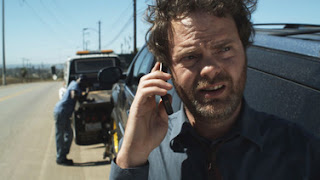
- Fundamentals, reception.
- American live action feature length film, 2010, rated R, 79 minutes, comedy, drama.
- IMDB: 5.6/10.0 from 2,869 audience ratings.
- Rotten Tomatoes: 23% on the meter; 22% liked it from 8,557 audience ratings.
- Directed by Barry W. Blaustein. Screenplay by Peter Himmelstein.
- Starring: Lewis Black as the Narrator, Sarah Silverman as Cheri Meyerwitz, Ron Rifkin as Henry Meyerwitz, Alicia Witt as Amy Harrison, Michael C. Hall as Jack Meyerwitz, Rainn Wilson as Joel Meyerwitz, Lesley Ann Warren as Marilyn, Taraji P. Henson as Mary, Judy Greer as Laura, Kate Mara as Meg,
- Setup and Plot
- Henry Meyerwitz has four grown children: Jack, the architect; Joel, the lawyer who took 8 times to pass the bar exam; Cheri, the failed artist/actress; Nathan, the writer, who is seven years younger than Cheri. Henry is distant and imperious. Jack is tasked each year with paying for an expensive dinner in honor of Henry's birthday.
- By Henry's seventieth birthday, family relations have gone from being tense and dysfunctional to harsh and confrontational. The main reason for this change is the wide success of Nathan's book Peep World, which is more than a bit too biographical for the comfort of Cheri, Joel, and Jack. To make things worse, Jack's business and revenue have shrunk, Joel's legal career is at a snail's pace, and Cheri's career is going nowhere. The topper is that Henry has a new girl friend Amy, who is the actress that plays Cheri in the film of Nathan's book.
- In the hours leading up to the seventieth birthday dinner, the slow burns of the principal characters are exposed. At the dinner, they burst out, capped by Henry's speech returning all their fire.
- Will the family gain some cohesion out of all this?
- Conclusions
- One line summary: The surfacing of truth is a painful process.
- Three stars of five.
- Scores
- Cinematography: 8/10 Well shot for the most part; on Netflix it seemed to have some intervals of focus that was too soft.
- Sound: 7/10 No particular problems, but I thought the sound could have been more of an asset to the film than it was.
- Acting: 8/10 The large cast included several skilled actors doing fine work.
- Screenplay: 5/10 The threads came together well at the end, but I thought the film would have been better without a narrator. Just to be clear, most of the laughs I got out of the film were from Lewis Black's expert delivery--as the narrator. The film was billed as a comedy; why should most of the humor come from the narrator's performance?
Dead in Tombstone

- Fundamentals, reception.
- American live action feature length video, 2013, NR, 99 minutes, action, Western, supernatural.
- IMDB: 4.8/10.0 from 2,699 audience ratings. Estimated budget, 5.2 million USD.
- Rotten Tomatoes: 'No score yet..' and 30% liked it from 337 audience ratings.
- Netflix: 3.2/5.0 from 37,160 audience ratings.
- Directed by: Mike Elliott.
- Starring: Danny Trejo as Guerrero, Mickey Rourke as Blacksmith/Lucifer, Anthony Michael Hall as Red Cavanaugh, Dina Meyer as Calathea Massey.
- Setup and Plot
- Red Cavanaugh is about to be hung, but the rest of the Blackwater Gang rescue him. Red sells them a plan to liberate some gold. His half-brother and co-leader of the gang, Guerraro, agrees as long as they make it a quick and relatively clean operation.
- Once the plan is in motion, though, Red bloodies the town and kills his brother, as well as the sheriff. Red takes over the town with the remaining Blackwater Gang as his fellow enforcers. He joins forces with an English business man to keep a choke hold on the town and the mining of the gold.
- Meanwhile, Guerrero has a long chat with Lucifer, and strikes a deal with him. If Guerrero can snuff his old gang, Lucifer will restore him to life above ground.
- The bloodletting increases. One might expect that, given the cast and the setup of the screenplay.
- Does Guerrero re-gain his life, or does Red foul up his plans again?
- Conclusions
- One line summary: Deals with Lucifer sometimes take longer than expected.
- Three stars of five.
- Scores
- Cinematography: 7/10 Nicely atmospheric, but had some terrible hand-held moments.
- Sound: 6/10 I could hear the dialog, which was fine, but the sound did not add much to the mood of the piece.
- Acting: 8/10 I liked the four principal actors in this property.
- Screenplay: 4/10 This video would have been better at 75 minutes rather than 99. The script was a bit short on ideas, and long on torture, murder, forced labor, revenge, and betrayals.
Bastards (Les Salauds)

- Fundamentals, reception.
- French/German live action feature length film, 2013, NR, 100 minutes, thriller. Spoken word in French and English; sub-titles in English.
- IMDB: 6.2/10.0 from 1,429 audience ratings.
- Rotten Tomatoes: 64% on the meter; 40% liked it from 642 audience ratings.
- Netflix: 2.5/5.0 from 6,530 audience ratings.
- Directed by: Claire Denis.
- Starring: Vincent Linden as Marco Silvestri, Chiarra Mastrioanni as Raphaëlle, Julie Bataille as Sandra, Michel Subor as Edouard Laporte, Lola Chretin as Justine.
- Setup and Plot
- Marco is the captain of a supertanker. He's at sea and life is good.
- Pull the chain on that. Marco's sister Sandra calls him back in desperation: her husband has committed suicide, her daughter Justine is in a tailspin, and the family business is not going well. Sandra accuses wealthy business man Edouard Laporte as the cause of these ill fortunes. So Marco, in his own particular way, goes after Edouard.
- Marco's fortunes diminish, and he discovers a number of discouraging truths about his family. This gets more evident when a young man offers to sell Justine back to him for 5000 francs.
- Will Marco pull himself and his family out of this downward spiral, or will external forces be too great for that?
- Conclusions
- One line summary: Told slowly in noir style, to a harsh conclusion.
- Three stars of five
- Scores
- Cinematography: 6/10 For much of the screen time, there was not enough light or too much light, odd choices of camera angles, strange depth of field choices...in other words, much of the noir package. The filming of the car ride with passengers and drivers high on drugs was quite emblematic of this. I did not find this helpful or illustrative, even though this is a dark tale.
- Sound: 7/10 OK, redeemed by the sound track with the closing credits.
- Acting: 6/10
- Screenplay: 6/10 A bit lurching for my taste. The film jumps from segment to segment to segment, with time references not all that clear, with one message. All the characters are flawed and disgusting. Got it: noir.
Cybergeddon

- Fundamentals, reception.
- American/Canadian live action television series revisited for Netflix as a feature length film, 2012, NR, 90 minutes, thriller, mystery, crime.
- IMDB: 6.8/10.0 from 287 audience ratings.
- Rotten Tomatoes: no results at all.
- Netflix: 3.5/5.0 from 87,447 audience ratings.
- Directed by: Diego Velasco.
- Starring: Missy Peregrym as Chloe Jocelyn, Kick Gurry as Chase 'Rabbit' Rosen, Manny Montana as Frank Parker, Olivier Martinez as Gustav
Dobreff,
- Setup and Plot
- Chloe works for the FBI in counter-cyber-crime. Cool. Gustav, an old enemy, sets her up as the one who spreads a virus.
- Chloe breaks out of detention, and springs Rabbit (hacker whom she had caught before) from jail. She enlists her former partner, Frank. Gustav hates Chloe for posing as his daughter to get him in jail.
- As the movie proceeds, the stakes for Chloe keep getting higher in terms of possible long-term losses. First her reputation, then her liberty, then her mother's life, and finally something worse: all could be lost, unless victory is snatched from the jaws of defeat.
- Will Chloe and her unlikely friends come through for the good of the world? Are they able to defeat the mastermind Gustav?
- Conclusions
- One line summary: Lack of chemistry and a weak script doom this thriller.
- Two stars of five.
- Scores
- Cinematography: 4/10 The camera/CGI mix worked well for a while, but toward the end, shaky cam plus poor and ancient graphics (UNIX command shell screens???) were a huge let down.
- Sound: 5/10 The music over the final credits was good.
- Acting: 2/10 The less said, the better.
- Screenplay: 4/10 A story does get told, but the linkage between plot points breaks all too often. A thriller needs to sell the idea that the stakes are high and the protagonists might be up to the tasks at hand. This was not accomplished.
Marksmen
- Fundamentals, reception.
- American animated television mini-series, 2013, NR, 85 minutes, action, animation.
- IMDB: Under 5 ratings. Estimated budget, 500,000 USD.
- Rotten Tomatoes: no records at all.
- Netflix: 2.2/5.0 from 3,253 audience ratings.
- Written and directed by: Michael Benaroya.
- Voice actors: Bruce Barker, Tom Kennedy.
- Setup and Plot
- A post-apocalyptic war breaks out between two cities (New San Diego and Lone Star, TX) following the collapse of the old US government.
- New San Diego has some high tech, drones, satellites (the few remaining), and uses solar for energy. Lone Star uses oil and guns. Lone Star appears to be running out of oil, and so decides to conquer NSD.
- Lone Star's treachery gains them an early advantage, but NSD's tech superiority catches them up. Maintenance problems (post apocalypse, after all) foul up both sides.
- Who comes out on top, or do both sides lose?
- Conclusions
- One line summary: Poor animation meets Pyrrhic victory in post-apocalyptic Southwest.
- One star of five.
- Scores
- Art/Animation: 2/10 Horrible. Panning over still layers with clumsy assembly. Character faces never move. Uninteresting, uninspired, ugly, and primitive.
- Sound: 4/10 Sometimes adds to the story.
- Voice Acting: 4/10 Some of it was OK, but most was not worth listening to.
- Story: 2/10 A good 8 minutes of story stretched well past breaking to 85 minutes. Fighting, betrayal, destroy scarce resources, repeat.
Prisoners of the Sun

- Fundamentals, reception.
- American/German live action feature length film, 2013, NR, 89 minutes, fantasy.
- IMDB: 3.6/10.0 from 464 audience ratings. Estimated budget, 18 million USD.
- Rotten Tomatoes: 'No reviews yet,' and 0% liked it from 3 audience ratings.
- Directed by: Roger Christian.
- Starring: John Rhys-Davies as Prof. Hayden Masterton, David Charvet as Doug Adler, Carmen Chaplin as Sarah Masterton/Princess Amanphur, Emily Holmes as Claire Becket, Nick Moran as Adam Prime, Michael Higgs as Peter Levitz, Joss Ackland as Prof. Mendella, Gulshan Grover as Rohit.
- Setup and Plot
- We start from an 'ancient astronaut' theory. The 'Osiris' were (plural) a group of space faring aliens who wished to overtake Earth in ancient Egypt. A cunning pharaoh put them down and imprisoned them. He locked them beneath a pyramid. This includes an elusive key. Every 5000 years, the Osiris can contact home and get re-inforcements. That time is about up again.
- The key surfaces on the black market. Professors Masterton and Mendella seek to find the key and unlock the secrets. Peter Levitz gets the key first and frames Masterton for murder, so we have a good start in intrigue and conflict. Levitz is looking for treasure, Masterton is looking for knowledge, Adler replaces Mendella and does not seem up to the job at first. The ancient forces in the pyramid have their own motives. Sarah seems to have some destiny to fulfill.
- The pyramid is breached by Masterton's team, which is now swollen with local representatives and members of the military. The entrance is marked with a curse, and nearby within there are dangerous insects. That, of course, is not all, and more deaths occur. Even worse, they are soon sealed in the tomb. Adler and Rohit take point on finding the path for the group. They make their way to Princess Amanphur's tomb. At the bottom of this, they apply the key.
- Then the path goes on, and the real discoveries start. There is an active mummy 'guardian' in the tomb. Masterton has unannounced plans for his daughter. There are working alien artifacts deep in the tomb as the 5000 year cycle comes to an end.
- Will Masterton's intentions come into fruition, or will the masterstroke of the pharaoh 5000 years before hold sway?
- Conclusions
- One line summary: Modern archaeology seeks out ancient astronauts.
- Two stars of five
- Scores
- Cinematography: 5/10 The camera work is rather nice. The related CGI was another matter; some was OK, but other parts were just poor.
- Sound: 6/10 Fairly good, but could have added more to the overall feeling of suspense or danger.
- Acting: 4/10 David Charvet (Baywatch) as a PhD? Give me a break! Carmen Chaplin was moderately good.
- Screenplay: 3/10 This was old, tired, recycled material with a layer of not impressive new CGI. The ending was abrupt, and the exposition of motivations was too slim.
Asteroid vs Earth

- Fundamentals, reception.
- American live action feature length film, 2014, NR, 91 minutes, scifi, action, adventure.
- IMDB: 3.2/10.0 from 137 audience ratings.
- Rotten Tomatoes: 'No Critic Reviews,' and no audience ratings either.
- Directed by: Christopher Ray.
- Starring: Tia Carrere as Marissa Knox, Robert Davi as General Masterson, Tim Russ as Captain Rogers, Jason Brooks as Lt. Commander Chase Seward, Darin Cooper as Chief of the Boat (COB), Charles Byun as Kitsias.
- Setup and Plot
- A group of enormous asteroids heads toward earth. The young intern Kitsias does some projections, and discovers a projected impact in around ten days that will end life of earth. Kitsias determines that deflecting the asteroids will fail, while moving the earth from its current orbit might succeed.
- The US military, led by General Masterson, dragoons Marissa Knox, an expert in the Yap Trench, to implement Kitsias' plan. USS Polk takes her toward the trench, but the submarine encounters all sorts of difficulties, most of which were caused by the crew itself.
- Masterson continues to work with European and Russian space representatives to monitor how the deflection attempt is going. The short answer is that it made things worse than before.
- Just how bad do things get before the ultimate crisis? Will anyone survive it?
- Conclusions
- One line summary: Another bad disaster film from Asylum.
- One stars of five
- Scores
- Cinematography: 5/10 The camera work was excellent, but the CGI sucked rocks.
- Sound: 5/10 Neither good nor bad, nor interesting, nor relevant.
- Acting: 4/10 I still like Tia Carrere and Robert Davi, but what were they doing with these other actors?
- Screenplay: 0/10 Very discouraging in its depth of badness. Much of the dialog as nonsensical, and the internal contradictions seemed endless. Aside from those two discouraging issues, the film was not engaging.
SAGA: Curse of the Shadow (Curse of the Dragon Slayer)

- Fundamentals, reception.
- American live action feature length film, 2013, rated , 105 minutes, action, adventure, fantasy.
- IMDB: 4.9/10.0 from 1768 audience ratings.
- Rotten Tomatoes: 'No reviews yet...' and 34% liked it from 81 audience ratings.
- Netflix: 3.0/5.0 from 134,953 audience ratings.
- Directed by: John Lyde
- Starring: Danielle Chuchran as Nemyt Akaia, Richard McWilliams as Keltus the Wanderer, Paul D. Hunt as Kullimon the Black, Adam Abram as Fangtor Bloodmoon, James C. Morris as Gyramuck/Maggut Gulbrow, Eve Mauro as Tarsa, Danny James as General Drennon, Kyle Paul as Mulgrut, James Gaisford as Kethku, Bailee Mykell Cowperthwaite as Prophetess (body), Stephanie Breinholt as Prophetess (voice), Michelle Aiden as Delorus the Mermaid, Clare Niederpruem as Mulva the Mermaid, Christel Edwards Anthony as Gipple the Mermaid.
- Setup and Plot

- Filmed in Utah, with lots of sand, caves, and huge rock formations.
- Prehistory: the Gods, on some planet, at some time, have put down civilization for some reason, and killed a big portion of humanity. The Order, led by the Prophets, tries to restore civilization, while the Shadow rises and awaits the awakening of the God of Death. So, we have a familiar environment for swords, sorcery, battles, revenge, and conflicts on a dying world.
- We open the narrative with a fight between the female elf bounty hunter Nemyt and the male orc thief Fangtor Bloodmoon. Nemyt kills Fangtor, but Fangtor curses her body as she delivers the fatal blow with her sword. The fight scenes here were absolutely terribly done. Meanwhile, Keltus interrogates a dwarf to discover the motives of the Shadow in the current conflict. The dwarf tells him of Kullimon's Raiders, who will deliver some artifact ('the Vessel') to the representatives of the God of Death. Among the orcs, Mulgrut and Kullimon have a bit of a disagreement. Kullimon loses, and Mulgrut takes leadership of the 'Horde' of ten orcs. Oi, totally disappointing.
- When Nemyt goes to collect her bounty reward, she is imprisoned by the local magistrate because of the Mark that Fangtor cursed her with. Keltus, the Ambassador of the Prophetess, releases her in the hopes that she will aid him find the Bone Vessel. On the way, they meet up with Kullimon, who has been tied up, bleeding, and left for dead by his erstwhile allies. The absurd trio advance to get the Vessel, so that the God of Death (Goth Azul) is not awakened.
- As they advance, they encounter difficulties, and best them, but usually with stiff prices. When Nemyt meets Mulgrut as representative of the Shadow, things get very dicey, very fast. The real representative of the Shadow appears, and the hopes of Goth Azul being kept contained slip away.
- Will the trio reverse the disaster at hand?
- Conclusions
- Blood on the camera lens: nonsense. The fight choreography could have been better.
- One line summary: Middling good, nicely shot, low-budget fantasy adventure tale.
- Seven of ten.
- Scores
- Cinematography: 7/10 Rather good for this sort of tale. The costumes were a bit better than I expected, at least here and there.
- Sound: 10/10 Amazingly good. I seldom experience fantasy films with such excellent musical accompaniment.
- Acting: 6/10 The actors who play the three protagonists hit their marks and speak their lines. However, the orc Horde was about as convincing as the Keystone Kops.
- Screenplay: 6/10 A story was told, and the plot moves along, but the dialog is stilted past the point of believability. Orcs taking the higher moral stances? An orc leader singing like he was on Wagon Train? An orc sounding like Yoda?
Captain America: the First Avenger

- Fundamentals, reception.
- American live action feature length film, 2011, rated PG13, 124 minutes, action, sci-fi.
- IMDB: 6.8/10.0 from 304,699 audience ratings. Estimated budget, 140 million USD.
- Rotten Tomatoes: 79% on the meter; 73% liked it from 175,646 audience ratings.
- I watched this on FX (cable television), complete with commercials, instead of my more usual online streaming.
- Directed by: Joe Johnston.
- Starring: Chris Evans as Captain America/Steve Rogers, Hayley Atwell as Peggy Carter, Tommy Lee Jones as Colonel Chester Phillips, Hugo Weaving as Johann Schmidt/Red Skull, Dominic Cooper as Howard Stark, Stanley Tucci as Dr. Abraham Erskine.
- Setup and Plot

- Set in 1942, first in the eastern USA, then in the European theatre of World War II, Allies versus Nazis. The scrawny and sickly Steve Rogers tries to enlist in the military so as to go to war in Europe. He gets rejected repeatedly. Dr. Erskine notices his moxie, however, and arranges for him to be inducted anyway for purposes of human experimentation. The experiment works, and the CGI Steve Rogers gets 'changed' into the real-life Chris Evans.
- The opposite number to Dr. Erskine and his group is HYDRA, a Nazi group that does weapons research, among other things. HYDRA assassinates Dr. Erskine, and blows up part of his laboratory. Steve deals with the assassin successfully, and gains public notoriety. Colonel Phillips is impressed, but only mildly so. The military recruits Steve to do USO shows with female singer/dancers to sell war bonds. Steve is good at this, but it does not get him much respect.
- At one point, Steve goes AWOL and brings about the liberating of 400 prisoners. Steve gets a more real wartime role, plus special equipment from Howard Stark, the predecessor of Tony Stark. Steve gains more respect with Colonel Phillips and other Allied commanders.
- Steve and his personal allies take on HYDRA, which breaks away from the Nazis. How will that turn out? Will Steve stop HYDRA's direct attack on the USA?
- Conclusions
- One line summary: The ultra-capable first Avenger is constructed from an Army reject.
- Four stars of five.
- Scores
- Cinematography: 8/10 Well-shot for the most part, though the CGI on the early Steve Rogers was pretty bad.
- Sound: 8/10 No particular problems.
- Acting: 7/10 I liked Tommy Lee Jones and Stanley Tucci. Chris Evans was better by far than he was in Fantastic Four.
- Screenplay: 9/10 Exposition of motivation and logical progression of plot were well-constructed for an action/scifi piece.
Paranormal Asylum: the Revenge of Typhoid Mary

- Fundamentals, reception.
- American live action feature length film, 2013, NR, 88 minutes, horror.
- IMDB: 2.3/10.0 from 325 audience ratings.
- Rotten Tomatoes: 'No reviews yet,' and 60% liked it from 105 audience ratings.
- Netflix: 2.7/5.0 from 120,779 audience ratings.
- Directed by: Nimrod Zalmanowitz
- Starring: Nathan Spiteri as Andy, Cameron Chiusano as Dan, Laura Gilreath as Michelle, Rosalind Ashford as Ghost, Jenny Lee Mitchell as Typhoid Mary, Paul Bright as Dr. Brooks, Boomer Tibbs as George Sheffield, Aaron Mathias as Mark Goodwin, Grace Evans as Evelin.
- Setup and Plot
- Dan, Andy, and Michelle (Andy's girlfriend), decide to make a documentary about the real-life Typhoid Mary, and the final months of her life. They find some of the places where she stayed and met descendents of some of the people who knew her. They set up equipment to record events.
- Michelle, while alone, tries a seance, and this does not go well. Dan keeps seeing ghostly figures. At least at first Andy does not see them.
- There's a thread about the origin of modern psychotropic drugs; the film makers pursue this for their documentary. There is a thread about Michelle being possessed, and the consequences of this.
- Will any of the protagonists survive this encounter?
- Conclusions
- One line summary: Poor ghost story, poor as found film, poor as paranormal.
- One star of five.
- Scores
- Cinematography: 2/10 There were handheld problems here and there. The fakery with the ghosts was just plain bad, and there was so much of it. Even the day light 'normal' scenes were de-colorized to look faked.
- Sound: 3/10 Annoying from beginning to end. It sounds dubbed.
- Acting: 0/10
- Screenplay: 0/10 Hm, the usual for this type of film: no resolution in any thread. No 'moving on' for any of the ghosts, or whatever they are. No toe hold for logic or rational processes. Lack of exposition of motivations. No humour of any sort.
Codependent Lesbian Space Alien Seeks Same

- Fundamentals, reception.
- American live action feature length film, 2011, unrated, 76 minutes. Comedy. Fail.
- IMDB: 5.9/10.0 from 158 audience ratings.
- Rotten Tomatoes: 89% on the meter; 62% liked it from 491 audience ratings.
- Netflix: 2.2/5.0 from 1,369 audience ratings.
- Written, directed, produced by: Madeleine Olnek.
- Starring: Lisa Haas as Jane, Susan Zeigler as Zoinx, Dennis Davis as Senior Agent, Alex Karpovsky as Rookie Agent, Jackie Monahan as Zylar, Cynthia Kaplan as Barr.
- Setup and Plot
- Inhabitants of an alien planet decide that their ozone depletion can only be solved by one or two of their race having their hearts broken. Zoinx and Zylar are dispatched to Earth to have their hearts broken. Zoinx meets Jane and eventually gets to know her somewhat.
- Two men-in-black types observe this process, and attempt to blur the memories of any sightings. It seems, though, that no intervention is needed; nobody notices anything in this film.
- Jokes are made about new foods: alcoholic beverages, coffee, desserts. Jokes are made about culture clashes. All jokes failed.
- The aliens go home by means that challenge the lower bounds of all SFX. This was one of the worst SFX films ever made. In the right hands, that might have been funny.
- Conclusions
- One line summary: Seventy-six minutes of not funny.
- One star of five.
- Scores
- Cinematography: 2/10 Greyscale, so-so in quality. The quality dropped off when the camera work switched to shaky cam.
- Sound: 2/10 Irritating electronic music. Irritating alien voices. Irritating background rap music.
- Acting: 0/10
- Screenplay: 0/10 Nothing comedic, nothing engaging, nothing informative, nothing touching.
Dance in the Vampire Bund

- Fundamentals, reception.
- Japanese animated episodic television series, 2010, rated TV-MA, animation, action, drama. Twelve episodes, 24 minutes each.
- IMDB: 7.0/10.0 from 271 audience ratings.
- Rotten Tomatoes: no results, at all.
- Netflix: 3.9/5.0 from 370,639 audience ratings.
- Directed by: Akiyuki Shinbo.
- Starring: Monica Rial as Mina Tepesh, Alpha Lagrange as Akira Kobaragi. For much more detail, see wikipedia.
- Setup and Plot
- Take the TV-MA rating seriously.
- Mina Tepesh presents herself as the queen of contemporary vampires. She appeals on television for a Vampire Bund, that is, real estate where vampires can be free to be vampires. As a being who has had a long life, and who understands things like compound interest and capital appreciation, Mina's personal and family wealth is enormous. She uses this to pressure legislators to go along with her plans.
- There are humans who are in favour of the proposed Bund, and those who are opposed to it. Similarly, there are vampires in favour, and vampires against the proposal. This goes back and forth throughout the series.
- Mina has a connection with Akira, a teenaged human. Akira is also a werewolf, and sometime earlier in his life he vowed to protect Mina as best he could. About the time Akira took his vow, he also lost a big chunk of his memory.
- So, the series is about the conflicts mentioned above, about Akira protecting Mina, and about Akira regaining his memory. Toward the end of the series, the elders of three ruling vampire clans descend upon Mina, and force her to own up to a promise she made to the clans in the past.
- As the series draws to a close, everything is revisited, and everything cast into doubt. The clan leaders set up a fight between Akira and their own chosen assassins. If Akira wins, Mina can continue; if not, they force her into submission about rule of the vampires.
- So how does this pan out?
- Conclusions
- One line summary: Vampires seek a homeland and acceptance in animated Japan.
- Seven of ten.
- Scores
- Art/Animation: 7/10 Quite a bit of the art was fabulous; some was a bit too abstract and weird.
- Sound: 6/10 Typical action stuff, but neither great nor poor.
- Voice Acting: 8/10 No particular problems. Often good, sometimes a little screechy.
- Story: 6/10 There are a number of issues, mostly about motivation. Just what was the reason that Akira is so devoted to Mina? The suggestion that Mina might not be the 'real' vampire queen was not resolved. The reference to cloning was interesting, but I would have liked to have seen more detail about that. The strong, repeated statements that there was another queen candidate in the wings was never quite brought to fruition. The comedy vignettes about the maids shown after the credits were usually pretty funny.


