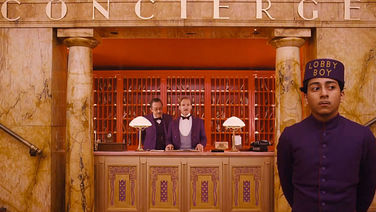
The Best Offer

- Fundamentals, reception.
- Italian live action feature length film, 2013, rated R, 131 minutes, drama, crime, mystery.
- IMDB: 7.9/10.0 from 43,079 audience ratings. Estimated budget, 13.5 million euros. Spoken word is in English.
- Rotten Tomatoes: 56% on the meter; 75% liked it from 3,823 audience ratings.
- I watched this on Showtime.
- Written and directed by: Giuseppe Tornatore. Music by Ennio Morricone.
- Starring: Geoffrey Rush as Virgil Oldman, Jim Sturgess as Robert, Sylvia Hoeks as Claire Ibbetson, Donald Sutherland as Billy Whistler, Liya Kebede as Sarah, Philip Jackson as Fred, Dermot Crowley as Lambert.
- Setup and Plot
- Virgil Oldman is a top level art auctioneer. His talent for recognising and evaluating centuries old art is impressive. He is very rich from his legitimate commissions on sales. With Billy Whistler, he pulls cons at his auctions. He sells paintings represented as ordinary and of small value, but are actually worth much, much more. Billy buys these pieces at auction, then Virgil pays back Billy with interest. Virgil keeps the painting for his private collection, which consists of portraits of beautiful women. He likes the portraits, but has difficulty dealing with real women.
- He starts getting calls from one Claire Ibbetson to evaluate her parents' estate. Lambert usually fields such calls, but she insists on talking to Mr Oldman. She is evasive in the extreme due to her pronounced agoraphobia. At first he deals with her only through Fred, the caretaker. With some diligence, he actually meets her in person, but with a wall between them. With more persistence, he gets to see her face-to-face.
- In parallel, he takes parts from the basement of the estate and has Robert evaluate them. They turn out to be pieces of a rare 18th century automaton. Gradually Robert assembles the automaton, and advises Virgil on how to proceed with Claire.
- Virgil and Claire grow close, or so it seems. Virgil has the pieces restored. When Virgil is about to go to his last auction in London, Claire decides not to sell. Virgil is so besotted with her that he puts up no objections. At the auction, Billy tells Virgil that he should have had more faith in him. It seemed a bit ominous.
- When Virgil returns, Claire is gone, Robert is gone, and Robert's friend Sarah is gone. His large, valuable personal collection of paintings of beautiful women is gone. One painting is left, which has a message from Billy.
- Virgil has a lonely path to tread to discover the details of the fraud and the betrayal. Will he find the answers that he wants?
- Conclusions
- One line summary: What goes around comes around in the art world.
- Four stars of five
- Scores
- Cinematography: 10/10 Beautifully shot.
- Sound: 10/10 No problems, and some of it was excellent. I had no problems hearing the dialog.
- Acting: 10/10 Rush, Sturgess, Hoeks, and Sutherland were quite good.
- Screenplay: 7/10 The narrative was slow, careful, and intricate up until the end. Then the reappraisal of everything was rapid. For me, the ending was a major disappointment. On the other hand, Virgil had been doing a lot of art thievery himself.
Red 2

- Fundamentals, reception.
- American live action feature length film, 2013, rated PG-13, 116 minutes, action, comedy, crime.
- IMDB: 6.7/10.0 from 94,146 audience ratings. Estimated budget, 84 million USD.
- Rotten Tomatoes: 42% on the meter; 63% liked it from 91,997 audience ratings.
- I saw this on HBO.
- Directed by: Dean Parisot.
- Starring: Bruce Willis as Frank Moses, Helen Mirren as Victoria, John Malkovich as Marvin Boggs, Mary-Louise Parker as Sarah Ross, Anthony Hopkins as Dr Edward Baily, Byung-hun Lee as Han Cho Bai, Catherine Zeta-Jones as Katja, Neal McDonough as Jack Horton, David Thewlis as The Frog.
- Setup and Plot
- As the film opens, Frank and Sarah are at a giant discount store. Frank is trying to build up the household infrastructure. Sarah is not so sure. Frank spots Marvin following them, and the fun begins. Sarah would like to experience Frank's line of work a bit more directly, but Frank is against it. He's not happy that Marvin had gifted Sarah with a handgun.
- A document surfaced on the Internet which implicates Frank and Marvin in an old operation in Russia called Nightshade. Soon enough, American intelligence is after them, led by Jack Horton. They get free of the Americans, but Horton hires Han to kill Frank, while MI6 hires Victoria to do the same. They head to Paris to get more information about the status of Nightshade from The Frog.
- In Paris they meet Katje, a Russian officer who has some sway over Frank. Together, they obtain the needed information from The Frog, mostly through Sarah's persuasion. With the new intelligence, they head back to London where they meet Victoria. They find the location where Dr Baily, the inventor of the Nightshade device, has been held prisoner for 32 years. Han engages them, and they steal his plane to travel to Russia with Baily.
- The group has some challenges to face. Han follows them to Russia, and is not happy about his plane. They have to get the device out of the Kremlin, with the guidance of the seemingly mad doctor. They need to make it back to London safely.
- Supposing that they manage all those tasks, will the genius have one more surprise for them? After all, 32 years is a long time to make plans.
- Conclusions
- One line summary: Fast-paced sequel to Red (Retired, Extremely Dangerous).
- Four stars of five
- Scores
- Cinematography: 9/10 Excellent except for a few passages of hand-held nonsense.
- Sound: 7/10 I had to adjust and re-adjust the volume level because of the film's music. That was a pain. Otherwise, I could hear the actors clearly.
- Acting: 9/10 Hopkins was simply stellar as the weapons inventor acting as if he was senile or demented, but was neither. Willis, Mirren, Malkovich, and Thewlis were excellent. I enjoyed the performances of McDonough and Lee more than I expected to. Also, the stunt work was fabulous.
- Screenplay: 10/10 On the action/thriller side, the plot moved right along, and all the right pieces connected. On the comedy side, I had several good laughs at the dialog and the situations.
Moonrise Kingdom

- Fundamentals, reception.
- American live action feature length film, 2012, PG 13, comedy, drama, romance.
- IMDB: 7.8/10.0 from 186,113 audience ratings. Estimated budget, 16 million USD.
- Rotten Tomatoes: 94% on the meter; 86% liked it from 132,953 audience ratings.
- I saw this film on HBO.
- Directed by: Wes Anderson; written by Wes Anderson and Roman Coppola.
- Starring: Bruce Willis as Captain Sharp, Harvey Keitel as Commander Pierce, Edward Norton as Scout Master Ward, Bill Murray as Walt Bishop, Frances McDormand as Laura Bishop, Tilda Swinton as Social Services, Jared Gilman as Sam, Kara Hayward as Suzy, Bob Balaban as The Narrator.
- Setup and Plot
- The film is set on New Penzance Island, 16 miles long, in 1965. Preteens Suzy and Sam decide to run away together in honor of their love for each other, plus their general unhappiness with their living situations. Suzy lives with her parents, both lawyers, and three younger brothers. Sam is an orphan who is in a foster home, but spends a lot of his time camping with the Khaki Scouts.
- Suzy's mother is having an affair with (police) Captain Sharp. Her father seems to miss this, but Suzy does not. Sam's foster home is loaded with much larger males who do not especially care for him. Flashbacks tell how Sam and Suzy met; a year later they decide to run away from home together. Sam's activities encourage his foster parents to expel him; this starts Social Services on his trail.
- The bulk of the film concerns the hit and miss search for the young pair, and the fall out when they are found. Captain Sharp, the scouts, and Social Services are on the hunt. Add to this a great storm (Hurricane Maybelline) that impacts the island later in the film.
- How does all this turn out?
- Conclusions
- One line summary: Preteen pair lead authorities on a chase.
- Four stars of five
- Scores
- Cinematography: 8/10 This is not a high budget film, but the visuals were well-crafted and fine to look at.
- Sound: 8/10 The background musical numbers were good for adding atmosphere. I could hear the dialog.
- Acting: 9/10 With another director, I would not praise the acting all that much. However, this brilliant cast clearly got along quite well with the director, and they are all on the same page.
- Screenplay: 8/10 Nostalgic and stylized. If you have acquired the taste for Anderson's work (which I have), you will likely be delighted.
Banshee Chapter

- Fundamentals, reception.
- German/American live action feature length film, 2013, rated R, 87 minutes, horror, thriller. Spoken word is in English.
- IMDB: 5.5/10.0 from 2,643 audience ratings. Estimated budget, 950,000 USD.
- Rotten Tomatoes: 78% on the meter; 43% liked it from 1,135 audience ratings.
- Directed by: Blair Erickson.
- Starring: Katia Winter as Anne Roland, Ted Levine as Thomas Blackburn, Michael McMillian as James Hirsch, Corey Moosa as Patient 11, Monique Candelaria as Patient 14, Jenny Gabrielle as Callie, David Midthunder as Raoul, Vivian Nesbitt as Olivia Kmiec, Alex Gianopoulous as Renny.
- From IMDB: '...investigative journalist, Anna, researching a missing friend who
ingested an undocumented research chemical once tested on civilians by
CIA MK-Ultra experiments.'
- There are references to numbers stations, hushed up kidnappings, and secret societies in the style of Lovecraft. That will attract some of the conspiracy theorists. On the other hand, this also pushes away many other potential viewers. Coupled with the shaky cam, this is a polarizing film, and its likely audience is small.
- Setup and Plot
- Journalist Anne Roland's college friend James has gone missing. Renny, the last man to see him alive has also gone missing after being interviewed extensively by police. Anne pursues; her editor helps by connecting her to gonzo journalist/personality Thomas Blackburn. She hopes that Blackburn will increase her knowledge of the drug that James ingested as an experiment for his next book.
- During a visit to Blackburn's house, Anne meets his chemist friend Callie, who has synthesized some of the drug. The trio drinks smaller quantities than James took, but the effects are still strong. When Blackburn and Anne wake up from the drug's knockout punch, Callie is nowhere to be found.
- Interleaved with the contemporary story are bits of archival footage that chronicle government experiments with some similar effects. The electricity is temporarily lost, screaming ensues, the patients get free of restraints, and the patients are not to be found immediately.
- Blackburn and Anne find Callie's lab, which contains a number of clues. Will this be enough to let Anne solve the riddle of James' disappearance?
- Conclusions
- One line summary: Small budget, but good acting, story, and direction.
- Four stars of five.
- Scores
- Cinematography: 6/10 There was a lot of archival film (black and white, low resolution, blurry) and shaky cam footage (variable, but mostly bad). However, unlike many other directors, Erickson seemed to know quite well how to use bad footage to increase the feeling of threat and isolation that thrillers need.
- Sound: 8/10 The music and foley were good for increasing suspense and creepiness.
- Acting: 8/10 Katia Winter and Ted Levine had a large percent of all the spoken lines. Both of them did fine jobs.
- Screenplay: 8/10 The script was not perfect, but did keep my attention. The plot moved forward quickly enough that my usual strong disgust for found film was not invoked. The providing of just enough clues to keep going was well done, and the exposition of motivations was nicely executed. About the time that I thought the film was more of an adventure/thriller, the ending reminded me that it was truly a horror movie. Well done.
Madras Cafe

- Fundamentals, reception.
- Indian live action feature length film, 2013, NR, 126 minutes, action, political thriller, bollywood, historical fiction.
- IMDB: 7.9/10.0 from 9,759 audience ratings. Estimated budget, 350 million INR.
- Rotten Tomatoes: 'No score yet...' and 76% liked it from 417 audience ratings.
- Directed by: Shoojit Sircar
- Starring: John Abraham as Vikram Singh, Nargis Fakhri as Jaya Sahni, Rashi Khanna as Ruby, Avijit Dutt as Swarup, Sanjay Burbuxani as Former Prime Minister, Ajay Rathnam as Anna Bhaskaran.
- Setup and Plot
- The setting is the turmoil of the 1990s in Sri Lanka. Vikram Singh is the point man for Army Intelligence (RAW, or Research and Analysis Wing) in the matter. He is drawn in when there are clear signs that an assassination attempt will be made on the former Indian PM, who seems likely to regain his seat of power.
- The enemy is faceless, well-organised, and quite good at segmenting what any individual or small group needs to know. Vikram and his entire organisation work very hard at this, and arrest several groups of perpetrators, only to find that there are many small, highly effective bands with the same goal.
- At one point, when Vikram gets close to a piece of the truth, he is kidnapped and tortured. He is rescued from this, and goes on the do more exceptional investigatory work. By the end of the story, though, Vikram has paid many high prices.
- Through the course of the investigations, Vikram interacts, guardedly, with war correspondent Jaya. Their careful sharing of information was a well-written part of the plot. Vikram's whole-hearted pursuit of the case had more than one bad effect on his relationship with his wife Ruby.
- The movie opens to Vikram in later life, alone, alcoholic, limping, and plagued with guilt over failures. Told in flashback style, the years spent pursuing the terrorists is gripping. The long effort at stopping the plot of Anna and the LFT was bulk of the film.
- Conclusions
- One line summary: Well-directed political thriller concerning the turmoil in 1990s Sri Lanka.
- Four stars of five
- Scores
- Cinematography: 8/10 Usually great, with a few moments of hand-held nonsense.
- Sound: 6/10 I liked the music over the closing credits. Sound was not done in the traditional Bollywood fashion, but then this is a more serious work than the more common musicals. Still, some instrumental music for accenting mood might have been nice.
- Acting: 8/10 The acting by the principals is outstanding.
- Screenplay: 10/10 The many threads are woven together rather well. The depiction of violence was difficult to watch at times, but trenchant and central to the overall story. Much more screen time goes to political intrigue and efforts at stopping a determined terrorist group from achieving its goals.
Captain America: the First Avenger

- Fundamentals, reception.
- American live action feature length film, 2011, rated PG13, 124 minutes, action, sci-fi.
- IMDB: 6.8/10.0 from 304,699 audience ratings. Estimated budget, 140 million USD.
- Rotten Tomatoes: 79% on the meter; 73% liked it from 175,646 audience ratings.
- I watched this on FX (cable television), complete with commercials, instead of my more usual online streaming.
- Directed by: Joe Johnston.
- Starring: Chris Evans as Captain America/Steve Rogers, Hayley Atwell as Peggy Carter, Tommy Lee Jones as Colonel Chester Phillips, Hugo Weaving as Johann Schmidt/Red Skull, Dominic Cooper as Howard Stark, Stanley Tucci as Dr. Abraham Erskine.
- Setup and Plot

- Set in 1942, first in the eastern USA, then in the European theatre of World War II, Allies versus Nazis. The scrawny and sickly Steve Rogers tries to enlist in the military so as to go to war in Europe. He gets rejected repeatedly. Dr. Erskine notices his moxie, however, and arranges for him to be inducted anyway for purposes of human experimentation. The experiment works, and the CGI Steve Rogers gets 'changed' into the real-life Chris Evans.
- The opposite number to Dr. Erskine and his group is HYDRA, a Nazi group that does weapons research, among other things. HYDRA assassinates Dr. Erskine, and blows up part of his laboratory. Steve deals with the assassin successfully, and gains public notoriety. Colonel Phillips is impressed, but only mildly so. The military recruits Steve to do USO shows with female singer/dancers to sell war bonds. Steve is good at this, but it does not get him much respect.
- At one point, Steve goes AWOL and brings about the liberating of 400 prisoners. Steve gets a more real wartime role, plus special equipment from Howard Stark, the predecessor of Tony Stark. Steve gains more respect with Colonel Phillips and other Allied commanders.
- Steve and his personal allies take on HYDRA, which breaks away from the Nazis. How will that turn out? Will Steve stop HYDRA's direct attack on the USA?
- Conclusions
- One line summary: The ultra-capable first Avenger is constructed from an Army reject.
- Four stars of five.
- Scores
- Cinematography: 8/10 Well-shot for the most part, though the CGI on the early Steve Rogers was pretty bad.
- Sound: 8/10 No particular problems.
- Acting: 7/10 I liked Tommy Lee Jones and Stanley Tucci. Chris Evans was better by far than he was in Fantastic Four.
- Screenplay: 9/10 Exposition of motivation and logical progression of plot were well-constructed for an action/scifi piece.
Grand Budapest Hotel

- Fundamentals, reception.
- American/German live action feature length film, 2014, PG13, 100 minutes, comedy.
- IMDB: 8.3/10.0 from 90,986 audience ratings.
- Rotten Tomatoes: 92% on the meter; 89% liked it from 63,065 audience ratings.
- I watched this on iTunes, 20140617.
- Directed by: Wes Anderson.
- Starring: Ralph Fiennes as M. Gustave H., F. Murray Abraham as the elder Zero (Mr. Moustafa), Adrien Brody as Dmitri, Willem Dafoe as Jopling, Jeff Goldbloom as Deputy Kovacs, Harvey Keitel as Ludwig, Jude Law as Young Writer, Bill Murray as M. Ivan, Edward Norton as Henckels, Saoirse Ronan as Agatha, Jason Schwartzman as M. Jean, Lea Seydoux as Clothilde, Tilde Swinton as Madame D., Tom Wilkinson as Author, Owen Wilson as M. Chuck, Tony Revolori as Zero.
- Setup and Plot

- We start the film with an Author, in his later years, doing a video recording. He then promises to tell the audience how he came to know a particular story.
- We switch back to 1968, when the Young Writer was staying at the Grand Budapest Hotel, which was in its fading, twilight years. The Young Writer meets Mr. Moustafa, who tells him the story of how he came to own the Grand Budapest Hotel.
- We switch back to 1932; the new Lobby Boy (Zero) begins his tutelage with M. Gustave. Gustave likes older, rich, blonde women, and he romances them. In particular, Madame D. is quite fond of him. She is on a trip, and has a presentiment of death. Sure enough, she dies in the town where she traveled to. Gustave and Zero hurry to see her, and are there in time to hear the reading of the will. The surprise is that she willed the priceless painting 'Boy with Apple' to Gustave. The family is furious, and Gustave is accused of her murder, but not before Zero and he secreted the painting.
- Mr. Moustafa pauses to describe his relationship to Agatha, who works in the bakery of the hotel. Agatha helps in the escape of Mr. Gustave. Then Moustafa returns to the investigation of Madame D's death, and the process of bringing the probate to a legally sound close.
- Mr. Gustave, with the aid of Zero and four fellow prisoners, escapes prison. Gustave reaches for help from his fellow concierge friends.
- In the counter-theme, Dmitri and his cohort Jopling, pursue Gustave for the sake of the painting, mostly.
- Will anyone find Serge, supposedly the real culprit in the death of Madame D. ? Do we get to know how Zero gets enough money to buy the Grand Budapest? Will Zero and Agatha ever get together legally? What will become of Dmitri and Jopling? Will Henckles re-capture Gustave or Zero?
- Conclusions
- One line summary: Funny, touching, bizarre, and well worth the watch.
- Four stars of five.
- Scores
- Cinematography: 10/10 Fine job.
- Sound: 10/10 Well done. Sometimes wildly inappropriate but usually good for a laugh or two.
- Acting: 10/10 What a cast! Great jobs by most involved. No bad performances.
- Screenplay: 6/10 The main plot is so stupid it is beyond belief, but one assumes that was on purpose. I got several belly laughs, dozens of smiles, and double handful of chuckles.
World War Z

- Fundamentals, reception.
- American live action feature length film, 2013, UR, 122 minutes (long cut), horror, zombies.
- IMDB: 7.1/10.0 from 300,721 audience ratings. Estimated budget, 190 million USD.
- Rotten Tomatoes: 67% on the meter; 73% liked it from 295,125 audience ratings.
- Directed by: Marc Forster.
- Starring: Brad Pitt as Gerry Lane, Mireille Enos as Karin Lane, Daniella Kertesz as Segen, James Badge Dale as Captain Speke, Ludi Boeken as Jurgen Warmbrunn, Matthew Fox as parajumper, Sterling Jerins as Constance Lane, Abigail Hargrove as Rachel Lane, Fana Mokoena as Thierry Umutoni.
- Setup and Plot
- Parents Gerry and Mireille have a nice life, and the day starts normally. While taking their two daughters Constance and Abigail to school, the normal seeming traffic jam mutates into a full-blown disaster. They encounter full-fledged zombies who are very fast and very strong. The time interval between a zombie's bite and the victim turning seems to be about 12 seconds.
- Gerry is a former UN investigator/facilitator who got people or information out of hotspots around the world, often with help from US Special Forces of one sort or another. So the US/UN extracts him and his family after he makes his way to New Jersey. The escape from the zombies is close, and young Tomas helps them in the final steps. Tomas gets extracted with Gerry's family.
- Gerry is sent to North Korea with an epidemiologist. This does not go well, but Gerry does meet a CIA agent who gives him the next clue: the Israelis seem to be succeeding in repelling the zombies. So Gerry and the elite military go to Israel. On the way, they see a nuclear explosion in the far distance, and Gerry's contact with Karin is broken by the EMP.
- Israel's wall worked, more or less, but they did not understand that zombies are attracted by noise. Celebratory songs amplified by a PA system incite the zombies to scale the 45 foot walls, one undead body over another. Gerry does learn that zombies were detected in India well before the incidents in Korea. He heads to India, even though he has been told in no uncertain terms that India is a 'black hole' in terms of information flux. Gerry gets on the literal last plane out of Israel. He loses his UN escort, but gains Segen, an Israeli soldier whose hand he cut off...to save her from becoming a zombie.
- Gerry takes the Belarus flight that he is on to the last remaining airport open, which is in Cardiff, Wales, UK. Unfortunately, a zombie hid himself on the plane's lavatory, and soon starts infecting people. Gerry gets a new set of difficulties, including a plane crash and a metal spike through his gut. He and Segen trudge forward.
- Will Gerry make it to the WHO research facility? Will the information, which he has expressed to no one, come to light, and be put to good use? Will his family be safe?
- Conclusions
- One line summary: Smart plot about fast zombies that convert humans quickly.
- Four stars of five.
- Scores
- Cinematography: 7/10 Mostly excellent, though some of the dark fight scenes were
- Sound: 8/10 No problems; though it might have been more effective for creepiness and suspense.
- Acting: 10/10 Excellent.
- Screenplay: 9/10 I liked it: action, suspense, quick thinking in difficult circumstances, and a plot that moved right along. The final segments, concerning the workaround to the apocalypse, were quite fine.
Splice

- Fundamentals, reception.
- Canadian/French live action feature length film, 2009, rated R, 104 minutes, horror, sci-fi.
- IMDB: 5.8/10.0 from 68,173 audience ratings. Estimated budget, 26 million USD.
- Rotten Tomatoes: 74% on the meter; 37% liked it from 250,630 audience ratings.
- I saw this film on the Syfy network, instead of my usual sources. This took 150 minutes.
- Directed by Vincenzo Natali, screenplay by Vincenzo Natali and Antoinette Terry.
- Starring: Adrian Brody as Clive Nicoli, Sarah Polley as Elsa Kast, Delphine Chaneac as Dren, Brandon McGibbon as Gavin Nicoli, Simona Maicanescu as Joan Chorot, David Hewlett as William Barlow.
- Setup and Plot
- Clive and Elsa have good success as gene splicers, and have produced two low level creatures, Fred and Ginger. All seems good at the beginning of the film.
- Joan, the leader of the company supporting their research, is pleased with their results to date. However, she needs (in the business sense) their research to take a different trajectory that will yield profits almost immediately. This direction is a bit boring scientifically, but will help the corporation's bottom line.
- Clive and Elsa are not openly insubordinate, but decide to pursue their desired research, which is to create a higher order pair than Fred and Ginger. While discussing having children one night, the couple get an alarm message from their lab. They rush over to find that the their experiment has grown at a much faster rate than expected. The living mass is in danger of dying. While attempting to save it, Elsa gets bitten. The experiment is saved, but the pair see that they have to go into full secrecy mode.
- As the spliced together being grows, their project manager, Barlow, orders their lab re-purposed to be used for research for Joan's new directive. Clive and Elsa move the creature to a basement area that is little used. As time moves on, Barlow has this area re-purposed as well, and the creature is moved to the farm where Elsa grew up. By this time, the creature can walk upright, has learned to spell a bit, and has shown itself to be amphibious. Elsa names it 'Dren' since the creature had used scrabble tiles to call her a nerd.
- While the pair deal with Dren's growing up, Joan needs a demo for her investors. She trots out her A-team, Clive and Elsa, who hope to show the usual pleasant antics of Fred and Ginger. Clive's brother Gavin has been caring for Fred and Ginger while Clive and Elsa have been absorbed with Dren. Gavin learns of Dren when he was following his brother; she almost kills him. Gavin misses that Ginger had changed sex, female to male, before the demo, which is an absolute disaster.
- Joan has angry investors on her hands, while Barlow is enraged at lack of results. Meanwhile, Clive and Elsa are still knee-deep in dealing with the growing Dren, who is still female.
- The pair face dilemmas. Is Dren an experiment, or is she their child? Moving to the farm brings up all sorts of memories of mother-daughter interactions in Elsa; this creates issues with Dren. They have invested all sorts of time in Dren, but this is not the work requested. Barlow grows suspicious, and will eventually sniff things out. What they have done is revolutionary, but also illegal. Should they present it anyway?
- Conclusions
- One line summary: Illegal research brings a world of problems.
- Four stars of five.
- Scores
- Cinematography: 7/10 Mostly fine, but quite a few sections were just too dark to make anything out.
- Sound: 8/10 No problems.
- Acting: 9/10 I liked the performances of all the six primary actors.
- Screenplay: 9/10 There are quite a number of stupid decisions made by the protagonists. On the other hand, these decisions drive the plot. The many moral quandaries evoked were interesting to watch unfold. The ending was one of the most fitting I've seen in a while.
The Returned

- Fundamentals, reception.
- Spanish/Canadian live action feature length film, 2013, NR, 97 minutes, horror, thriller, zombies.
- IMDB: 5.8/10.0 from 3,043 audience ratings. Estimated budget, 5 million USD.
- Rotten Tomatoes: 58% on the meter; 38% liked it from 483 audience ratings.
- Directed by: Manuel Carballo.
- Starring: Emily Hampshire as Kate, Kris Holden-Reid as Alex, Shawn Doyle as Jacob, Claudia Bassols as Amber, Barry Flatman as Hospital Chief, Melina Matthews as Eve.
- Setup and Plot
- Twenty years after the zombie apocalypse, there is an edgy steady state. There is a treatment that holds the zombie virus in check, but it is not a cure. It needs to be taken everyday, roughly speaking. The inevitable question is, will the supply give out?
- So we have another film about the politics of scarcity. There are anti-zombie protesters, and pro-zombie protesters. There are political factions to go along with the protesters (or perhaps the other way around). Even worse, there are groups in the two factions willing to kill to achieve their goals.
- The mechanism for making the treatment comes from the bodies of recently deceased Returned individuals (those who got the virus, but got the treatment in time). Since the program became more successful, fewer deaths have occurred among the returned. Hence the success of the program undermines its continuance. In another thread, a fully synthetic alternate treatment is being developed. The problem is, it has not been developed quickly enough to take up the failure of the original program.
- The film follows Kate, a physician who helps the Returned, and her husband Alex, who is secretly one of the Returned. A group breaks into the hospital, kills many of the Returned, and steals the database of the names, addresses, and contact information of a large number of the Returned. This puts Alex in danger.
- As the supply of treatments fails, Kate and Alex face many challenges to preserve Alex's life and to stay out of military prison camps. Will they succeed? Will the new treatments be perfected in time?
- Conclusions
- One line summary: Well-written thriller about containing the zombie apocalypse.
- Four stars of five.
- Scores
- Cinematography: 9/10 Very nice camera work.
- Sound: 8/10 No problems.
- Acting: 9/10 Good performances all around, especially from Kris Holden-Reid and Emily Hampshire.
- Screenplay: 8/10 Well-written, with good pacing for a thriller; both thoughtful and gut-wrenching. This is one of the best zombie films I have seen.
The Adventurer: Curse of the Midas Box

- Fundamentals, reception.
- British live action feature length film, 2013, PG, 99 minutes, action, family features.
- IMDB: 5.3/10.0 from 1,588 audience ratings. Estimated budget: 25 million USD.
- Rotten Tomatoes: 17% on the meter; 23% liked it from 599 audience ratings.
- Directed by: Jonathan Newman.
- Starring: Aneurin Neuman as Mariah Mundi, Sam Neill as Otto Luger, Michael Sheen as Charity, Ioan Gruffudd as Charles Mundi, Keeley Hawes as Catherine Mundi, Lena Heady as Monica, Xavier Atkins as Felix, Mella Carron as Sacha.
- Setup and Plot
- The time and place are somewhere that has both steampunk and fantastic elements. The clothing and cultural affect is late Victorian; the technology, steam, mechanical, with some electricity, but no electronics. The dual quests are for a lost brother and a magical, powerful box.
- The Mundi family and Charity are on one side of the quest for the box. Luger and Monica are on a different side. Charity gains some particular intelligence about Luger's efforts, plus a broken key relevant to the box. He relays some information and the pieces of the key. Soon thereafter, the Mundi family is attacked. Charity helps Mariah escape, but Charles, Catherine, and Felix are kidnapped. The parents, Charles and Catherine, and questioned harshly by Luger, and Felix is made to work in a particular mine.
- Mariah works at Luger's hotel to gain intelligence, disguised as a new porter. He has some success at this, and meets Sacha. After Luger gets the two broken key pieces from Felix and Mariah, he adds another piece to complete it. The fun really begins, as Luger gets closer to the box.
- Conclusions
- One line summary: YA action thriller; steampunk, fantastic elements.
- Four stars of five
- Scores
- Cinematography: 8/10 Dark and murky, but well shot.
- Sound: 9/10 No problems.
- Acting: 7/10 Sam Neill was good, as was Michael Sheen. Aneurin Neuman grew on me during the film.
- Screenplay: 8/10 Moves right along. I'm looking forward to the sequel.
Much Ado about Nothing

- Fundamentals, reception.
- American live action feature length film, 2012, PG-13, comedy, drama, romance. Shot in greyscale ('black and white.')
- IMDB: 7.6/10.0 from 9,602 audience ratings.
- Rotten Tomatoes: 84% on the meter; 78% liked it from 24,841 audience ratings.
- Netflix: 3.4/5.0 from 36,414 audience ratings.
- Directed by: Joss Weedon. Screenplay: Joss Weedon, from the play by Shakespeare.
- Starring: Amy Acker as Beatrice, Alexis Denisof as Benedick, Nathan Fillion as Dogberry, Clark Gregg as Leonato, Fran Kranz as Count Claudio, Reed Diamond as Don Pedro, Jillian Morgese as Hero, Spencer Treat Clark as Borachio, Riki Lindhome as Conrade, Sean Maher as Don John.
- Setup and Plot
- The film was shot in Santa Monica (Los Angeles County, CA, US), in modern dress, with computers, pistols, automobiles, and live cell phone video.
- Leonato, the governor of Messina, welcomes back Don Pedro and his comrades, Benedick and Claudio, from a successful campaign, and hosts them for a time. Claudio and Leonato's daughter Hero take a liking to one another quickly. Benedick and Leonato's niece Beatrice take a dislike to one another and argue heatedly.
- Claudio and Hero's marriage is arranged quickly, while friends decide to deceive Benedick and Beatrice into thinking that each is in love with the other. Don Pedro's brother Don John arranges for Borachio and Conrade to bear false witness that Hero was untrue to Claudio. The marriage is stopped during the ceremony. Hero is rejected as an adulteress by her prospective groom, by her father, and by Don Pedro. Beatrice does not believe it. The priest at the ceremony counsels cooling down and investigating.
- Since this is a comedy, one knows that most of the issues will be resolved with a good dose of wit.
- Conclusions
- One line summary: Another modern take on the Shakespeare play.
- Four stars of five
- Scores
- Cinematography: 8/10 Greyscale (the vast majority of pixels are neither black nor white) is not my favourite, and never will be. Despite that, most of this film is beautifully shot; I took off 2 points for camera shake.
- Sound: 7/10 There is a whole lot of mumbling going on. I was hoping for crisply spoken and perfectly miked dialog.
- Acting: 7/10 Amy Acker, Sean Maher, Clark Gregg, and Reed Diamond were delightful. I expected a bit more from some of the other actors.
- Screenplay: 9/10 The modern visuals with a dose of modern musical instruments coupled with the original text was an interesting mix. Perhaps this is not for everyone, but I liked it.
Metallica Through the Never
 |
| Rob Trujillo |
- Fundamentals, reception.
- American live action feature length film, 2013, NR, 92 minutes, documentary, music, heavy metal.
- IMDB: 7.3/10.0 from 8,349 audience ratings.
- Rotten Tomatoes: 78% on the meter; 78% liked it from 11,871 audience ratings.
- Netflix: 3.9/5.0 from 12,828 audience ratings.
- Directed by: Nimrod Antal. Written by: Nimrod Antal, Kirk Hammett, and Lars Ulrich.
- Starring: Dane DeHaan as Trip; as themselves: James Hetfield, Lars Ulrich, Kirk Hammett, Robert Trujillo; Kyle Thomsen as The Rider.
- Setup and Plot
- This is a two-layered film. There is the live action concert footage, then there is a fictional layer about Trip the roadie.
- The camera work was crisply shot with excellent equipment and was brilliantly edited. The sound was seamlessly joined to it.
- Some of the most powerful moments for me were when the thousands of audience members sang the choruses in unison, while the band listened and encouraged. I wished I had been there.
- Conclusions
- If you like heavy metal in general, or Metallica in particular, see this one.
- One line summary: The live action concert footage was great; the contrived side-plot, not so much.
- Four stars of five.
- Scores
- Cinematography: 10/10 Inventive and of professional quality; excellent camera crew and film editing.
- Sound: 10/10 The sound quality and editing were great.
- Acting: 7/10 Loved the live action concert performances. James Hetfield is quite the showman. The icing from the Trip video did not add anything. Fortunately, the sound editing moved across those parts without a hitch.
- Screenplay: 7/10 Fortunately, the live action concert footage was dominant. I liked the lasers and pyrotechnics, plus the way the props crew constructed huge pieces while the band continued. The so-so fictional sub-plot about the roadie, Trip, was less interesting.
Beyond Outrage

- Fundamentals, reception.
- Japanese live action feature length film, 2012, rated R, 112 minutes, action, crime,
- IMDB: 6.8/10.0 from 2,012 audience ratings.
- Rotten Tomatoes: 50% on the meter, but no consensus yet; 58% liked it from 537 audience ratings.
- Netflix: 3.6/5.0 from 21,027 audience ratings.
- Written and directed by: Takeshi Kitano.
- Starring: Takeshi Kitano as Otomo, Toshiyuki Nishida as Underboss Nishino, Tomokazu Miura as Chairman Kato, Ryo Kase as Underboss Ishihara, Hideo Nakana as Kimura, Yutaka Matsushiga as Detective Shigeta, Fumiyo Kohinata as Detective Kataoka, Shigero Koyama as Fuse.
- Setup and Plot
- The film is set five years after the action in Outrage ended. The utterly corrupt Detective Kataoka is still in place, perhaps more entrenched than ever. Detective Shigeta, a somewhat more straight arrow policeman, accompanies Kataoka on some of his tasks. Kato is still the Chairman of the Sanno family. Ishihara, formerly in Otomo's clan, is now Kato's underboss. Sanno has grown considerably in wealth and power, partly because they absorbed Murase's drug business from the first film. Other shifts in the Sanno family are placement of older executives by younger ones, and valuing acquiring money over muscling other families. As the story begins, there is plenty of fuel in the powder keg: the old guard resent the younger upstarts; when one family expands, others just might feel threatened; the cops have decided to squeeze Sanno growth.
- In the film's opening sequence, the police lift a car out of the water. Kataoka and Shigeta arrive, so one knows there is a yakuza connection. One of the bodies is that of a high government official, and evidence points to the Sanno family issuing the hit order. The police see that Sanno thinks its money is sufficient to buy enough protection for them to openly order the killing of a government official. This seems to be too much to bear.
- Kataoka sets about riling up the yakuza against each other. He encourages one of the old guard in the Sanno family (and two of his followers) to attempt to unseat and replace Underboss Ishihara. He arranges a meeting with Fuse, the Chairman of the Hanabishi family. That seems to go well, but when the trio report back to Kato, they find that Fuse had described the whole situation to Kato. Fatalities ensue. Resentment increases. Kataoka gets schooled by his superior: did he not know that the Sanno and the Hanabishi were secretly allied?
- To get the pot boiling even harder, Kataoka arranges for the release of Otomo, whom Kimura (released years before) shanked in prison. Kataoka had misled many (such as Chairman Kato) into thinking Otomo was dead. Now the detective brings him forth to heat things up.
- Kataoka arranges a meeting between Kimura and Otomo, which goes surprisingly well. Also, he nudges them toward 'helping' the alliance between Hanabishi and Sanno to fail magnificently.
- That is most of the early context of the film. How goes the execution? Quite well, I would say.
- Conclusions
- I would recommend seeing this film to anyone who has seen all of the first one.
- The exposition of motivations was much better. I could see easily why the houses were at war with each other, and why individual alliances formed and broke.
- One line summary: Growing pains in the yakuza family structures.
- Four stars of five.
- Scores
- Cinematography: 10/10 Excellent, professional.
- Sound: 8/10 No particular problems, but them again, I was following the sub-titles.
- Acting: 10/10 Even better than the original.
- Screenplay: 8/10 Nice story development. Not as many plot points as the original, but easier to follow.
Outrage

- Fundamentals, reception.
- Japanese live action feature length film, 2010, rated R, 109 minutes, action.
- IMDB: 6.8/10.0 from 6,811 audience ratings. Spoken word is in Japanese, sub-titles in English.
- Rotten Tomatoes: 77% on the meter; 64% liked it from 3,288 audience ratings.
- Netflix: 3.5/5.0 from 121,334 audience ratings.
- Written and directed by: Takeshi Kitano.
- Starring: Takeshi Kitano as Otomo, Kipei Shiina as Mizuno, Ryo Kase as Ishihara, Fumiyo Kohinata as Detective Kataoka, Soichiro Kitimura as Kan'nai (Mr. Chairman), Tadashi Sakata as Okazaki, Kenji Morinaga as Abe, Tokio Emoto as Emoto, Hideo Nakano as Kimura, Jun Kunimura as Ikemoto, Tetta Sugimoto as Ozawa, Tomokazu Miura as Kato, Yuka Itaya as Otomo's girlfriend, Renji Ishibashi as Murase.
- Setup and Plot
- This film is about warring clans within a larger yakuza community. Mr. Chairman is the current overall leader; Ikemoto is one of his vassals. Ikemoto, however, has started an alliance with the Murase family, which deals drugs. Mr. Chairman is old school, and does not like trading in drugs. The protagonist, Otomo, is a vassal of Ikemoto, but is a sworn brother of Murase. Mr. Chairman charges Otomo with breaking this alliance by moving against Murase. Otomo is reminded rather strongly that his loyalty to Mr. Chairman should outweigh his brotherhood to Murase.
- In the meantime, Detective Kataoka of the Organized Crime Unit keeps getting paid off by Otomo. Kataoka gives Otomo intelligence that keeps the police off Otomo's back.
- Otomo sends an underling to let one of Murase's lieutenants cheat him out of 1 million yen. When the lieutenant arrives at Otomo offices, he sees that the Otomo group is vassal to the Ikemoto family, and begs to skip receiving the payment. Otomo's people insist. Word gets back to Murase, who phones Otomo immediately. Otomo accepts money and a finger and an apology from Murase's under boss, Kimura. The Ikemotos demand a finger from the under boss for the insult.
- As one might imagine, there was a lot of hurt pride. That, coupled with mistakes by underlings, ignites an escalating set of reprisals. Alliances shift. Ikemoto wants to keep the skim of the drug money, for instance, despite all the thunder coming down from Mr. Chairman.
- Otomo tries to keep his standing with Mr. Chairman sound, but it is not easy; nor is keeping his sworn brotherhood with Murase. Mr. Chairman makes it worse by demanding reprisals.
- Who survives this bloodbath? Will anyone be left in place?
- Conclusions
- One line summary: Harsh times during a clan versus clan yakuza war.
- Four stars of five.
- Scores
- Cinematography: 10/10 Beautifully shot using excellent equipment.
- Sound: 7/10 Moot; I read the subtitles. The background music was good, and the actors seemed to be well miked.
- Acting: 8/10 All the actors were rather good. Gladly, the ones with the most screen time were the best.
- Screenplay: 7/10 As a move-forward all-the-time action film, this was great. However, I could have used a bit more exposition of motivation. The film made more sense the second time I watched it, but was still a little unclear.
On the Job

- Fundamentals, reception.
- Philippine live action feature length film, 2013, rated R, 115 minutes, action, crime, drama.
- IMDB: 7.1/10.0 from 755 audience ratings. Spoken word is in Filipino/Tagalog/English; subtitles in English.
- Rotten Tomatoes: 100% on the meter (average 6.7/10, 13 ratings); 92% liked it from 1,232 audience ratings.
- Netflix: 3.2/5.0 from 10,091 audience ratings.
- Directed by: Erik Matti. Written by Erik Matti and Michiko Yamamoto.
- Starring: Joel Torre as Mario 'Tatang' Maghari, Gerald Anderson as Daniel Benitez, Piolo Pascual as Francis Coronel, Jr., Joey Marquez as Sergeant Joaquin Acosta, Michael de Mesa as Congressman Manrique, Leo Martinez as General Pacheco, Angel Aquino as Lulette, Vivian Velez as Thelma.
- Setup and Plot
- Set in the modern day Philippines. The film describes interactions among prisoners, crime families, police, police leaders, and politicians.
- Tatang and Daniel get releases (under the radar) recurrently from prison in order to carry out assassinations. Tatang's parole has been approved, and he hopes to pass the torch to Daniel after Tatang leaves prison. Daniel clearly is not ready, but it is hoped he will learn quickly on the job.
- At the NBI (National Bureau of Investigation), Francis takes on new responsibilities. He is both blessed and cursed by the shadow of his father's accomplishments, such as they were. One of his main jobs is to keep secret the traces of the assassinations. Francis is mob-connected, as it turns out, since his significant other is the daughter of a crime boss.
- As one might expect, this network of relationships, held together by blackmail and corruption, is doomed to break. One of Francis' potential witnesses in his corruption investigation gets targeted for assassination.
- Looks like the house of cards could all fall down. Which group gets the most damage?
- Tatang, Daniel, and Francis all have personal lives that they conduct through all of this. Will they keep their relationships together?
- Conclusions
- One line summary: Trying to bring down corruption has all sorts of personal consequences.
- Four stars of five.
- Scores
- Cinematography: 9/10 Well shot; looks good consistently.
- Sound: 10/10 The actors are adequately miked, and the music was wonderful.
- Acting: 8/10 Joel Torre was wonderful as Tatang. Joey Marquez, Gerald Anderson, Piolo Pascual, and Vivian Velez were all good in their roles.
- Screenplay: 7/10 The film did good story telling here, with a lot of texture, and just enough threads to follow. Almost two hours was not too long at all.
Odd Thomas

- Fundamentals, reception.
- American live action feature length film, 2013, NR, 100 minutes, comedy, mystery, horror.
- IMDB: 6.8/10.0 from 14,282 audience ratings. Estimated budget, 27 million USD.
- Rotten Tomatoes: 35% on the meter; 65% liked it from 4,490 audience ratings.
- Netflix: 4.0/5.0 from 26,740 audience ratings.
- Written, produced, and directed by: Stephen Sommers.
- Starring: Anton Yelchin as Odd Thomas, Addison Timlin as Stormy Llewellyn, Willem Dafoe as Chief Wyatt Porter, Gugu Mbatha Raw as Viola Peabody.
- Setup and Plot
- Odd Thomas is a psychic who sees dead people and can find people whom he needs to find. Stormy is the perfect girl friend for him.
- Thomas also sees details of murders that were, and murders that will be. He has a trust relationship with the Chief. He helps the Chief solve cases; the Chief helps him avoid courts and awkward questions.
- Odd and Viola share a terrible dream/nightmare about a massacre to come. Odd, Stormy, the Chief, and Viola try to figure out how to minimize the damage of this horrible problem to come.
- If Odd accomplishes this one large goal, what sort of price will he have to pay?
- Conclusions
- Based on the novel of the same name by Dean Koontz.
- One line summary: Young adult clairvoyant tries to minimize damage to his town from supernatural evil.
- Four stars of five
- Scores
- Cinematography: 10/10 Beautifully shot.
- Sound: 8/10 No particular problems.
- Acting: 10/10 Anton Yelchin, Addison Timlin, and Willem Dafoe were excellent. The onscreen chemistry between Yelchin and Timlin was wonderful, and Dafoe was brilliant with the two of them. These three dominate the movie, but the other players were good as well.
- Screenplay: 7/10 The voice-over soon got to be too much. Based not on the book, I would say that the story hung together well, and generally moved forward. The ending was sweet and poignant in a young adult setting, and begged for a sequel.
Rapture Palooza

- Fundamentals, reception.
- American live action feature length film, 2013, rated R, 84 minutes, comedy, fantasy.
- IMDB: 5.2/10.0 from 5,173 audience ratings.
- Rotten Tomatoes: 22% on the meter; 32% liked it from z audience ratings.
- Netflix: 3.3/5.0 from 73,001 audience ratings.
- Directed by: Paul Middleditch.
- Starring: Craig Robinson as The Beast, Anna Kendrick as Lindsey Lewis, John Francis Daley as Ben House, Rob Corddry as Mr. House, Ana Gasteyer as Mrs. Lewis, John Michael Higgins as Mr. Lewis, Calum Worthy as Clark Lewis, Paul Scheer as Security Wraith, Ken Jeong as God, Tyler Labine as Shorter Wraith.
- Setup and Plot
- The Rapture comes. Mrs. Lewis gets taken up to Heaven, but is returned as defective. Those left behind have a lot to deal with: wraiths, molten rocks from the sky, blood rain, locusts who talk, crows that verbally abuse everyone, and the like.
- Worst of all is that a one-time politician, Earl Gundy, becomes the anti-Christ. He talks everyone into calling him The Beast. He has his own deadly Beastly Guards, and an array of wraiths protecting him. He takes over the world's armament, and destroys cities to spread terror and obedience.
- Lindsey and Ben are engaged, and hope to make a living in the apocalyptic times. A molten rock ends that. Ben's father works for The Beast, and suggests that the pair interview with The Beast. When The Beast finds that Lindsey is a virgin, he entices her to become his bride.
- They concoct a plan to imprison The Beast as predicted in the Book of Revelation. They proceed with this, and it seems to be going well, but Ben lasers God's son as he descends from heaven to take out the anti-Christ. God and The Beast have it out.
- How does this end up?
- Conclusions
- One line summary: Funny, irreverent look at the Christian apocalypse.
- Four stars of five.
- Scores
- Cinematography: 10/10 Just fine.
- Sound: 8/10 The actors are well-miked, but the music could have been better.
- Acting: 7/10 Craig Robinson, Anna Kendrick, and John Francis Daley (Bones) were the best. I liked most of the actors, but a few were not so good, such as Calum Worthy, Paul Scheer, and Tyler Labine.
- Screenplay: 7/10 I got several good laughs out of this one, mostly for its sheer irreverence. The stoner dogma was pushed a bit too hard for my taste.
Some Girls

- Fundamentals, reception.
- American/British live action feature length film, 1988, rated R, 94 minutes.
- IMDB: 6.0/10.0 from 1,820 audience ratings.
- Rotten Tomatoes: 50% on the meter; 44% liked it from 845 audience ratings.
- I watched the DVD version.
- Directed by: Michael Hoffman. Written by: Rupert Walters.
- Starring: Patrick Dempsey as Michael, Jennifer Connelly as Gabriella, Sheila Kelly as Irenka, Lance Edwards as Nick, Lila Kedrova as Granny, Andre Gregory as Mr. D'Arc, Florinda Bolkan as Mrs. D'Arc, Ashley Greenfield as Simone, Sanna Vraa as Young Granny.
- Setup and Plot
- Gabriella invites Michael to spend Christmas with the family in Quebec City. This includes the mother and father, plus sisters Simone and Irenka, and Irenka's boyfriend Nick.
- Michael runs afoul of just about everything. Gabriella tells him she is no longer in love with him. Gabriella's mother is a fairly strict Catholic who believes in avoiding sex before marriage. The family dog does not seem to like him.
- In a sub-thread, the grandmother is ill, and periodically escapes from the hospital to be with her dead husband at their previous home. While looking for Granny, Michael falls down a shaft. Granny discovers him, and they go back to where Granny lived with her husband, also named Michael.
- Michael gets a second round of this when the others go skiing, Nick goes for petrol, and Michael thinks he's alone with her. Michael finds Granny's long missing 'summer shoes.' When he tries to present her with them, he finds that Granny has gone to yet another house.
- On the way back to the hospital, Granny's health plummets. Nick and Michael don't quite get her back in time. The funeral was held before Christmas. Nick leaves after the viewing. At Christmas, things are a bit somber. Michael meets (yes, mysterious) Young Granny at the family tomb.
- Michael has farewell discussions before he goes home.
- Conclusions
- One line summary: A fine comedy about a duck out of water with an eccentric family.
- Four stars of five
- Scores
- Cinematography: 10/10 Professional presentation, start to finish.
- Sound: 9/10 The actors were properly miked, and most of the incidental music was well-chosen.
- Acting: 8/10 Patrick Dempsey was brilliant, as were Lila Kedrova, Andre Gregory, Florinda Bolkan, and Sanna Vraa. Jennifer Connelly was hard to recognise, and was more irritating than anything else.
- Screenplay: 8/10 Clever and mature.
War on Whistleblowers: Free Press and the National Security State

- Fundamentals, reception.
- American live action feature length film, 2013, NR, 66 minutes, documentary.
- IMDB: 7.9/10.0 from 34 audience ratings.
- Rotten Tomatoes: 60% on the meter; 75% liked it from 13 audience ratings.
- Netflix: 3.8/5.0 from 10,300 audience ratings.
- Directed by: Robert Greenwald.
- Starring: Steven Aftergood, Danielle Brian, Michael Dekort, David Carr, Lucy Dalglish, Daniel Ellsberg, Michael Isikoff as themselves.
- Setup and Plot
- This documentary follows a small but interesting set of case studies of real whistleblowers who have been punished by the system in recent years.
- Daniel Ellsberg was a whistle blower from the 1970s who provides perspective throughout the film.
- In Iraq in 2006, our soldiers were dying due to the lack of armour on Humvees. An IED could take one out, and the military inside often died or were badly injured. Franz Gayl, Science and Technology Advisor to the Marine Corps in the Pentagon, became aware of this and brought it to the attention of his superiors. He championed the replacement of the Humvee by the safer MRAP, but was greeted with roadblocks. He went to USA Today to get leverage on the problem. He faced reprisals at work; his journalist contacts were threatened with lack of access. The Humvees were replaced, but Gayl was put on administrative leave for quite some time.
- Thomas Drake: (former) Senior Executive at the (US) National Security Agency was the second whistle blower profiled. 'We do not spy on Americans,' was a phrase Drake heard at work. However, he started his job on 2001/09/11; thereafter, however, he noted huge breaches of this key charter element of the NSA. Massive amounts of information were being collected on US citizens living inside the USA. Drake exposed portions of this process. His life was massively invaded in response by the FBI. The Justice Department threatened him with the Espionage Act, and specific charges that could potentially land him in jail for the rest of his life.
- Michael DeKort: (former) Lead Systems Engineer: The Deepwater Program, for the US Coast Guard was the third to be profiled. DeKort brought to the light of day two major problems with the Coast Guard fleet's upgrade: radios with non-waterproof circuitry, and hulls that were overly susceptible to buckling. DeKort used YouTube to spread the story, and it eventually found its way to 60 Minutes. DeKort stayed out of jail.
- Thomas Tamm: (former) Attorney in the Justice Department was the fourth to be profiled. He was in the Office of Intelligence Policy and Review within Justice. He talked to victims of the 9/11 terrorist attacks. His group applied for judicial warrants to listen in on persons in the United States who were thought to be connected to terrorists. His group worked with the FBI which had developed the 'probable cause' for these warrants. Some cases were treated differently, however.
- All of these whistle blowers suffered in their professional lives. All of them tried to go through official channels, where they were largely blocked. I specifically liked the point made that the recent administrations leak secret information as a matter of policy, and none of those leakers go to jail.
- How did these stories pan out? What are the implications for other potential whistle blowers?
- Conclusions
- One line summary: Well made documentary about federal whistle blowers after 20010911.
- Four stars of five.
- Scores
- Cinematography: 8/10 Fine for a documentary.
- Sound: 8/10 Voices and words were clear enough. Incidental music was not overbearing.
- Acting: z/10 Not applicable.
- Screenplay: 8/10 The telling of the four stories were well packaged.